

Your living room probably does more work than any other space in your house. It hosts movie nights, family hangouts, remote work sessions, and the occasional yoga stretch. Yet most people try to update it by impulse-buying a couch or swapping pillows and hoping for the best. The truth is, learning how to update your living room with the right furniture starts with a plan, not a store visit.
This guide walks you through every step, from defining your focal point to choosing the right coffee table to mapping traffic flow, so every furniture purchase earns its place.
Key Takeaways
-
The fastest way to refresh a living room in 2026 is to rethink your layout first, then swap a few items like the sofa, coffee table, and side tables.
-
Every layout should be organized around a clear focal point, whether that's a TV wall, fireplace, or large window, while preserving comfortable traffic flow.
-
Mixing scales, textures, and shapes (slim console table + deep sofa + round coffee table) looks more curated than a matching furniture set.
-
Measure your room before buying furniture for proper fit, including doorways and hallways that the pieces must travel through.
-
Invest more in anchor pieces (sofa, media unit, rug) and save on easily changeable accent pieces like side tables and table lamps.
Start with a Clear Plan for Your Living Room
In 2026, most living rooms pull triple duty: workspace, family room, and entertainment center. Without a plan, updates tend to drift, and the space feels disjointed. A quick audit changes that.
Walk through your living room and note what already works. Maybe the natural light from those large windows is fantastic, or the existing armchair still fits your style. Then note what frustrates you: a cramped walkway, not enough room for drinks, nowhere to store games. These pain points tell you which furniture pieces to replace first.
The goal is not to replace everything at once. Create a phased plan. Allocate roughly 40–60% of your budget to the sofa or sectional, 20% to the rug and media unit, and the rest to secondary items. Set a target date, for example, "refresh done by November 2026 before the holidays," to stay focused and catch seasonal sales.
Define How You Use Your Living Room Day to Day
Different lifestyles demand different living room furniture choices. Prioritize functionality and lifestyle in furniture selection before worrying about style or color.
Consider these use-case scenarios:
-
TV-centric room: a large sectional oriented toward the screen with a low media console
-
Conversation-first room: two sofas or a sofa plus two chairs, with seating arranged to create conversation areas instead of facing only the TV
-
Family room with kids: durable performance fabrics, storage ottomans, rounded furniture edges
-
Live-work room: a desk in the corner, lighting that supports both tasks and relaxing
Write a quick priority list: "seat 6 adults comfortably," "hidden storage for board games," "enough room for a yoga mat." This list will guide decisions about whether you need a large sectional or multiple conversation areas with separate chairs.
Choose and Elevate the Focal Point
A focal point can be a TV, fireplace, or window. It's the visual anchor where your eye lands first when you walk through the front door. Every successful room needs one.
Organize furniture around a central feature for visual anchoring. In a TV room, the main sofa faces the screen. In a fireplace-led room, angle seating toward the fire and place the television on an adjacent wall. A statement wall can also serve as a focal point in a living room, created through large art or bold paint.
Multiple focal points can make a room feel cluttered. If you have both a big window and a fireplace, choose a single focal point to enhance room design and let the other play a supporting role. Use furniture to frame the lead: matching chairs flanking a fireplace, or a low media console grounding a wall-mounted TV.
This is one of those interior design principles that sounds simple but transforms a space immediately.

Map Out Furniture Layout and Traffic Flow
Finalize your layout before ordering any new furniture. Map out natural walking paths to avoid cramped spaces.
Key spacing rules to follow:
|
Measurement |
Recommended Distance |
|---|---|
|
Main walkways between furniture |
30–36 inches |
|
Sofa to coffee table |
16–18 inches |
|
Conversation grouping width |
8–10 feet max |
|
Furniture pulled from the wall |
12–18 inches |
Maintaining open walkways between furniture enhances space perception. Keep traffic flow unobstructed for easier movement by ensuring door swings and drawer pulls have clearance.
Avoid pushing furniture against the walls for a spacious feel. Instead, floating furniture arrangements create intimate conversation areas, especially in a larger space. Position sofas and chairs to face each other for conversation. Leave 30–36 inches in main walkways between furniture so people can walk comfortably around the seating area.
Sketch your floor plan on graph paper or use a free online room planner. Mark windows, radiators, outlets, and door positions before you arrange furniture.

Update Your Seating: Sofas, Sectionals, and Chairs
Seating is the biggest living room furniture purchase and sets the comfort level and style direction for the entire space. Choose furniture sized appropriately for the room.
When to pick each type:
-
Standard sofa: rooms under 12–13 feet wide, narrow door frames. Compact 2-seaters run 55–71 inches; standard 3-seaters span 71–90 inches.
-
Sectional: open-plan spaces and big families. A large sectional can define a seating area without building walls.
-
Multiple chairs: smaller rooms where a couch would overwhelm, or flexible conversation setups.
Mix shapes and textures for visual interest in furniture. Pair a velvet accent chair with a linen sofa, or mix exposed metal legs with wood frames. Mix chair types to accommodate various body types instead of buying a matching set.
For homes with kids or pets, performance fabrics (Crypton, Sunbrella blends) resist stains. Darker tones forgive wear; patterns hide it even better. Choose a seat depth of 31–39 inches for standard comfort, deeper for lounging.
Choose the Right Coffee Table
The coffee table is both a practical workhorse and a visual anchor in the middle of your main seating area.
Choose a coffee table that is roughly two-thirds the length of your sofa. If your sofa seat sits at 18–20 inches, aim for a table at the same height or 1–2 inches lower. Coffee tables should be 18 inches from seating for easy access, so everyone can sit and reach their drink without stretching.
Shape guidance:
-
Rectangular: suits long sofas and narrow rooms
-
Round or oval: softens boxy rooms, eliminates sharp corners for families, improves traffic flow
-
Square: works in a symmetrical layout with twin sofas
Wood adds warmth. Glass keeps a small room airy. An upholstered ottoman doubles as extra seating. Lift-top styles offer hidden storage. In a very tight space, skip the large coffee table entirely and rest drinks on a side table instead.
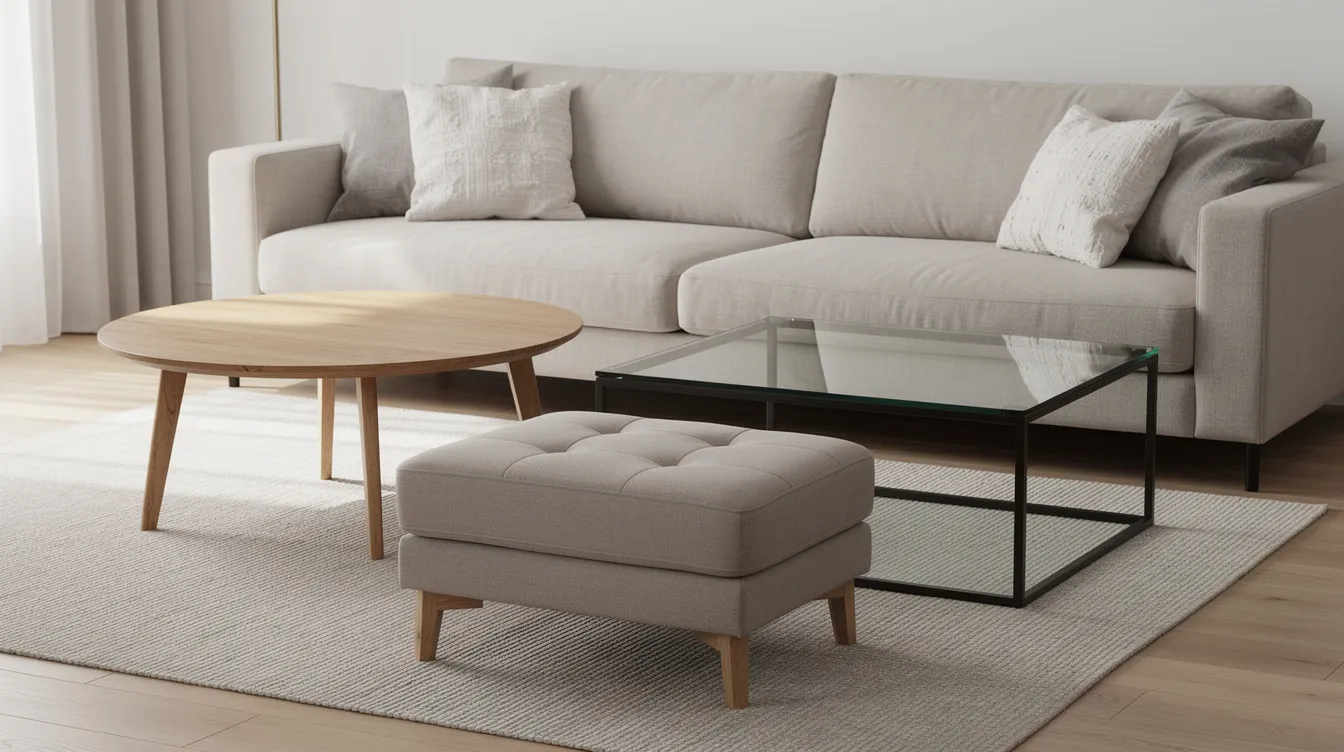
Side Tables, Console Tables, and Smart Storage
Secondary surfaces make a living room genuinely livable. Every seating spot should have a reachable surface within arm's reach for phones, books, and drinks.
Place a console table behind a floating sofa for layering. It finishes the view from the entryway, hides cable clutter, and holds lamps or baskets. A slim console table also works in tight entry zones near the front door.
Multifunctional furniture can maximize space utilization. Consider media consoles with doors to store electronics, sideboards used as TV stands, storage ottomans, or a bench with built-in shelves. Mix heights and styles slightly: a sleek metal console table with solid wood side tables keeps the room from feeling flat.

Balance Symmetry, Scale, and Proportion
The best rooms balance symmetry for order and asymmetry for interest. Use symmetrical and asymmetrical layouts based on desired formality.
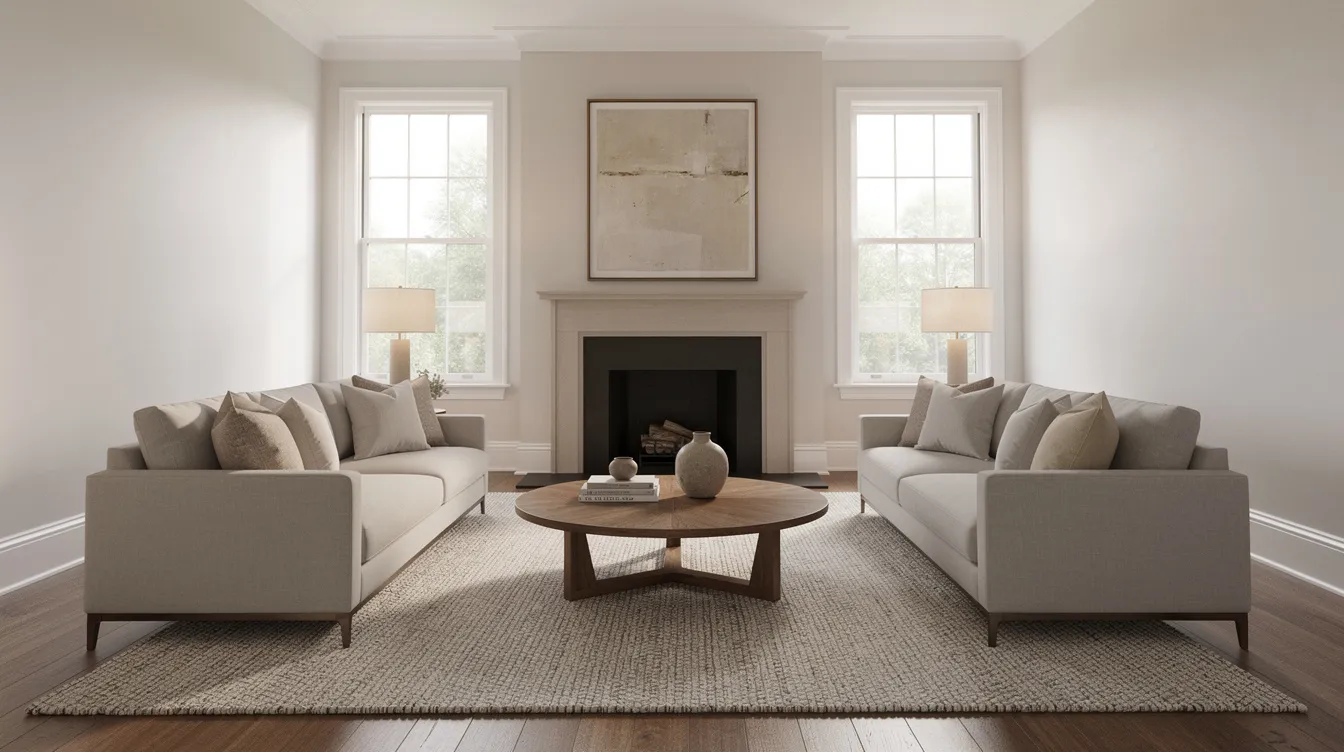
A symmetrical layout example: two matching armchairs facing a sofa, a centered coffee table, and identical lamps on either side. For a more relaxed space feel, break the symmetry with a differently styled accent chair or an asymmetrical shelf arrangement on the opposite wall.
Balance furniture with the room's primary use and scale. Avoid pairing an oversized sectional with a tiny table. Mix larger anchor pieces with smaller accents for balance. If your ceiling is 9 feet high, choose a media unit that fills at least one-third of the wall width. Use small black items like lamp bases or picture frames to provide visual contrast against lighter furniture and decor.
Consider Rugs, Lighting, and Wall Decor with Your Furniture
Area rugs, lighting, and art must be planned alongside furniture to avoid scale mistakes.
A rug can define a seating area and create cohesion. Choose a rug that fits under all furniture legs, or at a minimum, the front legs of your sofa and chairs. A 9x12 rug is often ideal for living rooms. Avoid small rugs that don't anchor furniture properly. Area rugs should fit under all furniture in a seating arrangement and create visual layers in a room.
Lighting should be layered for balance and comfort. Use a mix of overhead, floor, and table lamps. Lamps should be at eye level when seated. Warm color temperatures (2700–3000K) create a cozy atmosphere, while fixtures with dimmers let you shift between entertaining and relaxing.
For wall art, hang pieces so the center sits at roughly 60–66 inches from the floor. Artwork above the sofa should span about two-thirds of the sofa's length.
Five Layout Ideas That Work in Real Living Rooms
Copy or adapt any of these ideas to your own room dimensions.
-
Classic sofa + two chairs: sofa faces the focal point, two chairs angled across a central coffee table, side tables beside the sofa arms.
-
Sectional-centered: L-shaped sectional defines the seating zone, coffee table in the center, and an accent chair across from the open side for balance.
-
Symmetrical twin sofas: two identical sofas facing each other, a coffee table between, a focal point at one end. Matching lamps reinforce the formality.
-
Open-concept zoning: floating sofa separates the living room from the dining area, console table behind the sofa, large rug marking the living zone.
-
Irregular L-shaped room: strongest focal point anchors one arm; the secondary arm becomes a reading nook or workspace in the corner.
Practical Furniture Shopping Tips for 2026
Online shopping and longer lead times for custom furniture pieces make careful planning non-negotiable. Here's how to shop smart:
-
Measure meticulously: wall-to-wall dimensions, window positions, door swings, and the path from the front door to the living room.
-
Order swatches: view upholstery samples under both daylight and evening lamp light before you spend.
-
Prioritize spending: sofa or sectional first, then rug, then secondary tables and accent chairs.
-
Check logistics: know delivery level (white-glove vs threshold), assembly requirements, return windows, and restocking fees before you shop.
Replacing small pieces with larger items can sometimes reduce visual clutter. Contrary to popular belief, a few well-chosen large pieces often look cleaner than many scattered small ones.
Step-by-Step Mini Makeover Plan
You don't need a full renovation. Here's a weekend-to-one-month plan:
-
Day 1: Declutter and measure your room, windows, and doorways.
-
Day 2: Choose your focal point and sketch a layout on graph paper.
-
Week 1: Identify which existing pieces to keep and list the 2–3 new items that create the biggest difference.
-
Week 2–3: Order your anchor piece (sofa or sectional) and main rug.
-
Week 4: Add the coffee table, side tables, and any accent chairs.
High-impact swaps to consider: replacing an undersized coffee table, adding a larger rug, or swapping a bulky media unit for a lower, wider console. Live with each change for a week before adding more to ensure the room still flows.
Common Mistakes to Avoid When Updating Living Room Furniture
Many living rooms feel "off" because of a few fixable mistakes, not a lack of style.
-
Sofa too big for the room: walkways feel cramped, the space looks stuffed. Avoid overcrowding by leaving visual breathing room in the room.
-
Tiny rug that floats in the middle: area rugs should anchor all or most furniture legs, not sit like an island on the floor.
-
Putting all furniture against the walls: this empties the center and kills intimacy.
-
Not enough surfaces: forgetting side tables means drinks end up on the floor.
-
Blocking natural light: Tall furniture in front of windows darkens the room and fights the concept of your design plan.
Fixes are simple: swap a square coffee table for a round one to improve circulation, pull the sofa 12 inches from the wall, or add a few items like a slim side table beside every seat. Take photos of your living room from each corner. Viewing the space on a screen makes the imbalance easier to spot.
FAQs About Updating Living Room Furniture
How often should I update my living room furniture?
Anchor pieces like sofas and armchairs typically last 7–10 years with proper care. Smaller updates like pillows, throws, accent tables, and table lamps can be refreshed every 2–3 years to keep the room feeling current without a full overhaul. If you want to leave more comments or questions about timing, consider how your family's needs shift over time.
What is the best furniture layout for a small living room?
Choose a compact sofa or loveseat instead of a large sectional. Select a single, appropriately sized coffee table rather than multiple bulky pieces. Use leggy furniture (visible legs on sofa, slim console table, open side tables) and place large pieces away from door swings to keep traffic flow smooth. A round coffee table helps you walk freely around the seating area.
How can I arrange furniture if my living room has no obvious focal point?
Create one. A large piece of art, a statement media unit, or a tall bookcase on the opposite wall gives the room a visual anchor. A large area rug and a centered coffee table can also act as a focal point, especially in rental spaces without a fireplace or built-ins.
Can I mix different wood tones and metals in one living room?
Mixing finishes is encouraged in modern interior design trends for 2026. Choose one dominant wood tone (like walnut) and one main metal finish (like matte black), then use others sparingly. Repetition ties things together: repeat a metal finish in both lamp bases and coffee table legs, and the room feels cohesive rather than chaotic.
How do I arrange furniture around both a TV and a fireplace?
In many real homes, the TV and fireplace share a wall or sit on adjacent walls. Two solutions work well: mount the television above a low fireplace if neck height allows comfortable viewing, or let the sofa face the TV while a pair of chairs can swivel toward either the TV or fireplace as needed. The key is letting one lead and the other rest in a supporting role.
Shop Living Room Furniture at Ideal Furniture

Refresh your home with Living Room Furniture at Ideal Furniture, where quality, comfort, and style come together. Whether you're searching for a cozy sofa, spacious sectional, comfortable recliner, stylish coffee table, or a complete living room set, our collection offers furnishings designed to fit your home and lifestyle.
Visit Ideal Furniture today to explore our Living Room Furniture selection and discover pieces that match your style, space, and budget. Our knowledgeable team is here to help you choose durable, attractive furniture that creates a warm, inviting living room for relaxing,